


The U.S. government’s Strategic Petroleum Reserve (SPR) is at its lowest level since 1983 as inventories that were already low before the Iran war come under increasing pressure.
Data released by the Department of Energy on Monday showed that the number of barrels of oil in the SPR declined by 6.1 million barrels last week, ending the week at 298.7 million barrels in inventory.
That is the lowest level in the EIA’s weekly data on SPR stocks since January 1983.
SPR inventories have fallen this year after President Donald Trump in March authorized the release of up to 172 million barrels in response to the impact of the Iran war on energy supplies, as Iranian attacks have slowed the flow of tanker traffic through the Strait of Hormuz.
TRUMP BLASTS BIG OIL FOR ‘MAKING TOO MUCH MONEY’
The Trump administration announced the releases on March 11, 2026, while EIA data shows that the SPR had about 415.4 million barrels of oil in inventory during the middle of March – with inventories now down about 116 million barrels as of early August.
The latest SPR releases follow a historic drawdown over the last several years, beginning with the release of 180 million barrels that was authorized by the Biden administration in response to Russia’s invasion of Ukraine in early 2022.
Inventories had been around 600 million barrels at the start of 2022 and fell to 375 million barrels by the end of the year.
FORGET GASOLINE: THIS OVERLOOKED FUEL COULD RAISE THE PRICE OF NEARLY EVERYTHING YOU BUY

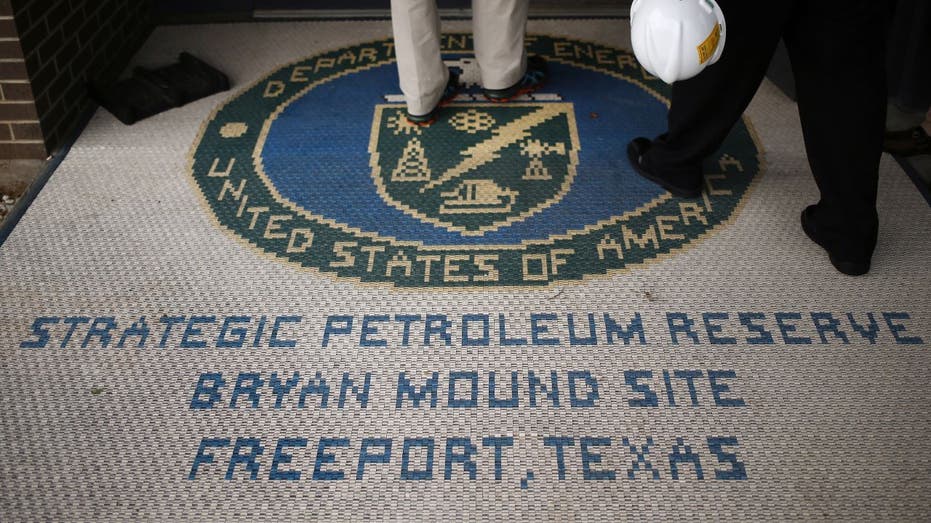
When SPR levels hit a low of about 347 million barrels in the summer of 2023, they began to gradually recover and reached 400 million barrels in May 2025. They hit a recent peak of over 415 million barrels in February, before the latest round of drawdowns began in March.
The SPR was created in 1975 under the Energy Policy and Conservation Act in response to the OPEC oil embargo of 1973-74, which was imposed by Arab countries in OPEC as retaliation for the U.S. resupplying Israel’s military during the Yom Kippur War.
The SPR was initially intended to have a capacity of 1 billion barrels of oil, although it never reached that level. Currently, the SPR has a congressionally-authorized maximum of about 714 million barrels of oil, while its highest ever inventory was 726.6 million barrels in December 2009 when it had an authorized capacity of 727 million barrels.
US OIL RESERVES DROP TOWARDS REAGAN-ERA LOWS, ‘SIGNIFICANT IMPACT AT THE PUMP’ COMING, EXPERTS WARN
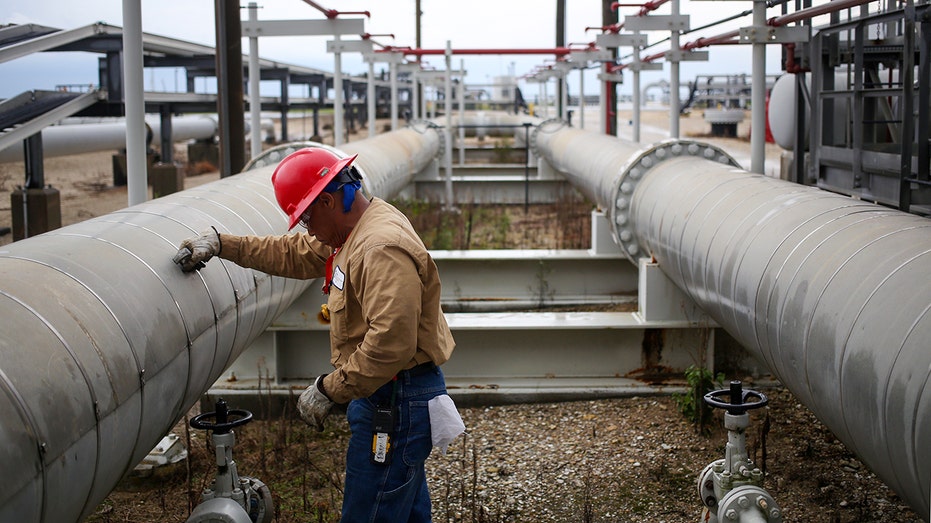
SPR reserves are stored at four locations thousands of feet below ground in salt caverns because those geological formations are more advantageous than surface facilities in terms of cost and maintenance, in addition to environmental and security concerns.
Geological pressures naturally seal cracks that emerge in salt formations to prevent leaking oil from seeping out, while the temperature difference keeps oil circulating to maintain its quality. Salt caverns can also be enlarged to fit precise dimensions through a mining process in which the salt is dissolved using fresh water.
The Government Accountability Office (GAO) issued a report in May which warned that Congress and the Department of Energy need to develop a unified long-term plan to address the SPR’s maintenance needs and a strategy for managing inventories into the future.
The One Big Beautiful Bill Act, which Republicans in Congress and Trump enacted in July 2025, included $171 million for acquiring petroleum products to be stored in the SPR, as well as $218 million to maintain the SPR.
Read the full article here


