


irina88w/GettyImages; Illustration by Hunter Newton/Bankrate
Mortgage rates ended January at 6.18%, matching their lowest levels since 2022. But can rates keep falling? That seems unlikely, mortgage experts say.
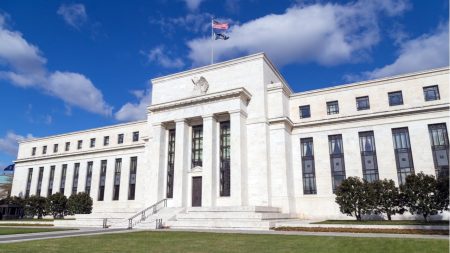
The Federal Reserve announced Jan. 28 that its benchmark interest rate would remain unchanged, reflecting a mostly healthy economy. While the central bank doesn’t control mortgage rates directly, it does set the tone. Meanwhile, housing economists see little on the horizon that would push mortgage rates down.
Mortgage rates are unlikely to move meaningfully lower until long-term inflation expectations ease. The main wildcard remains government intervention, which could push rates artificially lower.
— Stephen Kates
Financial Analyst, Bankrate
As of Jan. 28, the average 30-year mortgage rate was 6.18%, according to Bankrate’s weekly lender survey. That matched the lowest level since 2022.
“The Federal Reserve paused in January, as expected, and presented an encouraging picture of a stabilizing economic environment,” says Stephen Kates, financial analyst at Bankrate.
“Concerns about inflation reaccelerating during the April tax-refund season are likely to keep the Fed on hold until the second quarter of 2026. Likewise, mortgage rates are unlikely to move meaningfully lower until long-term inflation expectations ease,” he says. “The main wildcard remains direct and sustained government intervention, which could push rates artificially lower.”
Will mortgage interest rates keep going down?
Most housing economists say it’s unlikely rates will fall much farther. Fannie Mae predicts rates will hover around 6% for the rest of 2026 and into 2027.
“With the Fed on hold and Powell emphasizing the unemployment rate as the key signal, 30-year fixed mortgage rates are likely to remain pinned near 6.0% to 6.1%, unless upcoming labor data shows unemployment rising meaningfully — a shift that could support a bond rally and pull rates below 6%,” says Jeff DerGurahian, chief investment officer and head economist at loanDepot.
But mortgage rates are nothing if not volatile, and other factors could push them higher.
“Mortgage rates could continue to move higher as we head into the spring homebuying season,” says Lisa Sturtevant, chief economist at Bright MLS. “The Federal Reserve decided to hold the federal funds rate steady at their January meeting amidst relatively positive economic data. [But] political uncertainty, both domestically and internationally, is going to be an important factor in rate trajectory, leading to rate volatility and probably higher rates in the weeks ahead.”
Current mortgage rate trends
Higher mortgage rates have kept homeowners clinging to lower-cost loans, a trend known as the lock-in effect. Meanwhile, the median national home price clocked in at $405,400 in December, a record high for the month, according to the National Association of Realtors.
Bankrate’s weekly mortgage rate averages differ slightly from the statistics reported by Freddie Mac, the government-sponsored enterprise that buys mortgages and packages them as securities. Bankrate’s rates tend to be higher because they include origination points and other costs, while Freddie Mac removes those figures and reports them separately. However, both Bankrate and Freddie Mac report similar overall trends in mortgage rates.


Limited spots available
Help us shape the future of personal finance
We’re building something new to make rate shopping smarter and simpler. Join our waitlist to get early access, share your feedback, and unlock exclusive offers.
Priority rate alerts
Exclusive member offers
You’re signed up!
Now, help us personalize your experience. Answering the next few questions will ensure you receive the most relevant tips and offers.
Financial Products
What are you looking for?
Tell us which products you are in the market for
What do you already have?
Tell us which products you already have
Tell us a bit more about you.
Are you a homeowner?
Tell us about your financial situation
What is your FICO credit score
One more thing
What is your annual income?
Stay tuned to see what we’re building
You’re all set! We’re gearing up to share something big. You’ll hear from us soon with what’s next.
What to do if you’re getting a mortgage this year
- Improve your credit score. A lower credit score won’t prevent you from getting a loan, but it can make all the difference between getting the best possible rate and more costly borrowing terms. The lowest mortgage rates go to borrowers with the highest credit scores, usually at least 780.
- Save up for a bigger down payment. Putting more money down upfront can help you obtain a lower mortgage rate, and if you put down at least 20% of the purchase price, you’ll avoid mortgage insurance, which adds costs to your loan. If you’re a first-time homebuyer and can’t cover a 20% down payment, there are loans, grants and programs that can help. The eligibility requirements vary by program but are often based on factors like your income.
- Understand your debt-to-income ratio. Your DTI ratio compares how much money you owe to how much money you make, specifically your total monthly debt payments against your gross monthly income. Not sure how to figure out your DTI ratio? Bankrate has a calculator for that.
FAQs
-
Mortgage rates are not directly set by any one entity; they grow from a complicated mix of economic factors. Lenders typically set their rates based on the return they need to make a profit after accounting for risks and costs. The Federal Reserve gets a lot of attention, but it doesn’t directly set mortgage rates, either. The closest proxy for mortgage rates is the 10-year Treasury yield: Historically, the typical 30-year mortgage rate has been about 2 percentage points higher than the 10-year Treasury yield. But since the pandemic, that “spread” has been closer to 3 percentage points.
-
Deciding when to refinance is based on many factors. If rates have fallen since you took out your mortgage, refinancing might make sense. A refi can also be a good idea if you’ve improved your credit score and could lock in a lower rate. A cash-out refinance can accomplish that as well, plus give you the funds to pay for a home renovation or other expenses.
Why we ask for feedback
Your feedback helps us improve our content and services. It takes less than a minute to
complete.
Your responses are anonymous and will only be used for improving our website.
Help us improve our content
Thank you for your
feedback!
Your input helps us improve our
content and services.
Read the full article here