

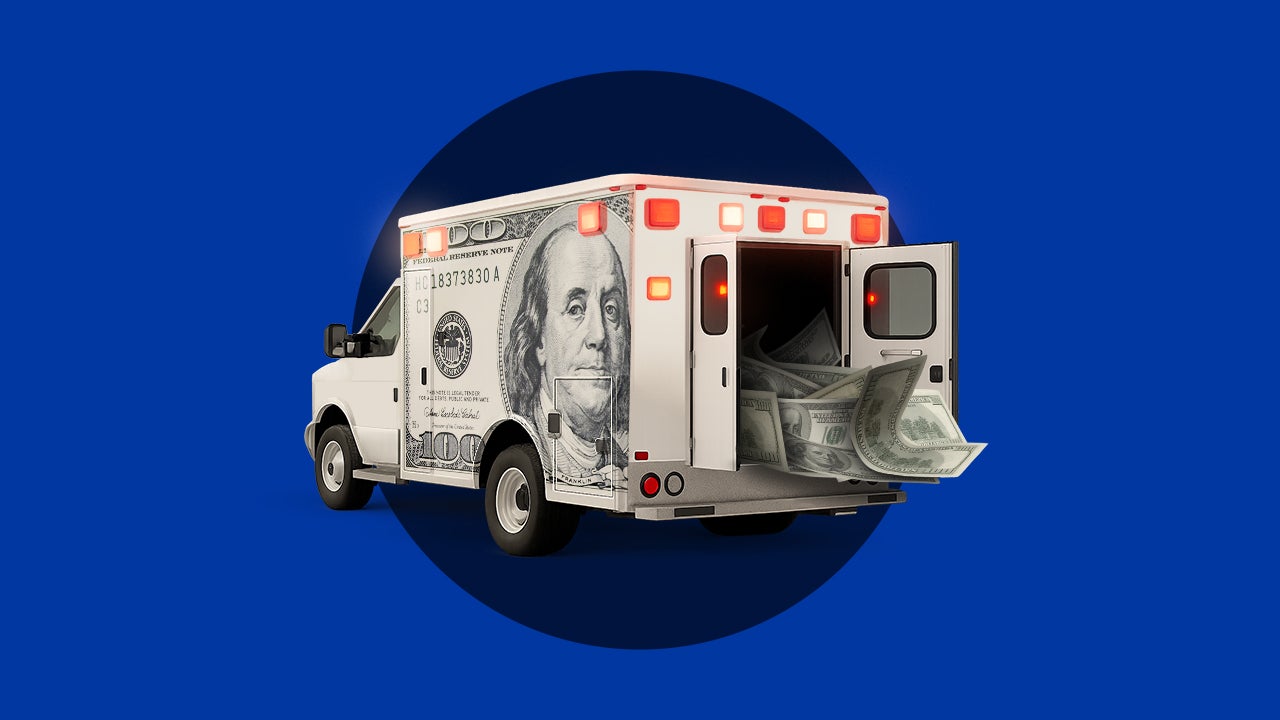
At a time of sticky inflation and a softening job market, extra money in the bank can serve as a lifeline for many consumers. Yet just 47% of Americans indicate they have sufficient liquidity or access to funds to cover a $1,000 emergency expense, a new Bankrate survey found. This can present challenges when dealing with job losses, medical issues or other problems that could exhaust one’s cash reserves.
The national opinion survey found that 30% of Americans say they would pay an emergency expense of $1,000 or more from savings, while 17% would rely on their regular income or cash flow. One-third said they would go into debt to cover such an expense, while others said they’d reduce spending to pay for it or take a different approach.
This data comes from Bankrate’s Emergency Savings Report, an exclusive survey-based report conducted by Bankrate and polling partners SSRS and YouGov Plc. Since 2011, the survey has polled U.S. adults annually about their levels of debt and emergency savings. The most recent data, polled in December 2025, examines how Americans would handle an unexpected $1,000 expense, what factors are impacting their ability to save for emergencies and how worried they are about covering living expenses if they were to lose income.
Most folks in America live paycheck-to-paycheck. This either results in, or coincides with, a lack of liquidity and lack of ability to achieve success with other key financial goals such as paying down debt or saving for emergencies and retirement.
— Mark Hamrick, Bankrate Senior Economic Analyst
Bankrate’s insights on emergency funds and personal savings
Bankrate Data Center
Since 1976, Bankrate has been the go-to source for personal finance data, publishing average rates on the most popular financial products and tracking the experience of consumers nationwide.
See more
Only around one-third would pay for an emergency from savings
Just 30% of people would use their savings to pay for a major unexpected expense, such as $1,000 for an emergency room visit or car repair. Meanwhile 17% would pay the costs from their regular income or cash flow.
Others would take on debt to cover emergency costs, such as financing them with a credit card (17%), borrowing from family or friends (12%) or taking out a personal loan (3%). Another 10% said they’d reduce spending on other things to pay for the emergency expense.
Inflation continues to hinder Americans’ savings
Though inflation is well below where it peaked in the summer of 2022, consumer prices are 26% higher than they were in December 2019, according to CPI data from the Bureau of Labor Statistics (BLS). These days, 54% of Americans are saving less for emergency expenses due to inflation/rising prices. Other reasons people are saving less include changing income/unemployment (26%) and recent interest rate cuts (17%).
“Inflation, and the resulting affordability challenges, clearly rules the roost when it comes to hampering the ability to save more money,” Bankrate’s Hamrick says. “This helps to explain why people are relatively downbeat on the outlook for their personal finances.”
Majority worry about covering living expenses after income loss
If they were to lose a primary source of household income tomorrow, 43% of respondents say they would be “very worried” and 25% would be “somewhat worried” they wouldn’t have the emergency savings to cover immediate living expenses over the next month. Fewer said they’re “not too worried” (17%) or “not at all worried” (12%).
Earnings changes impacted emergency savings fluctuations
Those who reported increasing their emergency savings in 2025 were nearly four times more likely to also report increased household earnings over the past year (47% vs. 13%) compared to those who decreased their savings. Conversely, those who had reported a decrease were four times more likely to also report a reduction in earnings.
Notably, the survey did show that some were more successful than others at building their savings. This includes men, younger adults, those with higher levels of education, those who don’t have kids and higher wage earners.
When asked about changes to their emergency savings in 2025, 21% of men and 16% of women said it increased. Similarly, 28% of Gen-Z adults said it increased, compared with 19% of Millennials, 14% of GenXers and 15% for baby boomers.
Those with at least a four-year college degree were twice as likely as people who never went to college to grow their emergency savings (26% vs. 13%). Meanwhile, 21% of non-parents were able to increase their savings compared with 16% of parents. Among those who earn at least $100,000 per year, 27% were able to grow their emergency savings in 2025, compared with 11% of those who earned less than $50,000. Lower wage earners, in fact, were most likely to be living with no emergency savings at all.
Only 1 in 5 increased emergency savings last year
In October 2025, roughly one-third (32%) of those surveyed reported having either somewhat less or much less emergency savings than at the start of the year. Roughly another third (31%) reported having about the same amount, while nearly 1 in 5 (19%) reported having more savings. Another 18% had no emergency savings at the start of the year and still had none in October.
However, the survey did not show a clearcut relationship between one’s spending habits and ability to save. Those with decreased emergency savings (69%) were more likely to have spent more on basic necessities than those with increased savings (59%). Yet those with increased savings (25%) were more likely to have increased their spending on big-ticket items like a car or a house than those with decreased savings (14%).
“Rising income is the most important factor for being able to maintain and boost emergency savings over time,” Bankrate financial analyst Stephen Kates, CFP, says. “While controlling spending is important, nothing compares to simply having more money to contribute to the cause.”
Nearly a quarter of Americans have no emergency savings
While experts typically recommend keeping three to six months of expenses saved for emergencies, in reality, many people don’t have nearly that much saved. Only 46% of Americans have enough emergency savings to cover three months of expenses.
Otherwise, 30% of Americans have some emergency savings, but not enough to cover three months’ expenses. Another 19% could cover three to five months of expenses from their emergency savings, and 27% have enough to cover six months of expenses. Nearly 1 in 4 (24%) of Americans have no emergency savings at all.
Source: Bankrate Emergency Savings Surveys
Emergency savings levels, by generation
| Gen Zers (ages 18-28) | Millennials (ages 29-44) | Gen Xers (ages 45-60) | Baby boomers (ages 61-79) | |
|---|---|---|---|---|
| No emergency savings | 34% | 28% | 24% | 16% |
| Some, but less than would cover three months’ expenses | 37% | 31% | 34% | 20% |
| Three to five months’ expenses | 18% | 16% | 22% | 22% |
| Enough to cover six months’ expenses or more | 10% | 25% | 20% | 41% |
Source: Bankrate Emergency Savings Survey, May 16-19, 2025
The majority of people are uncomfortable with their level of savings
Sixty percent of Americans are uncomfortable with their level of emergency savings — 31% are very uncomfortable, and 29% are somewhat uncomfortable.
Only 40% of people are comfortable with their level of emergency savings, including 27% who are somewhat comfortable and 13% who are very comfortable.
Source: Bankrate Emergency Savings Survey, May 16-19, 2025
A majority (80%) of people who are comfortable with their emergency savings could cover at least three months of expenses, including 51% who could cover at least six months of expenses. Among those uncomfortable with their emergency savings, 76% would be unable to cover three months of expenses, including 36% who have no emergency savings at all.
Gen Zers and Gen Xers (ages 45-60) are the least likely to feel comfortable with their emergency savings — 29% and 31%, respectively — compared to 40% of millennials (ages 29-44) and 52% of baby boomers (ages 61-79).
There’s a wide gap between how much savings people would need to feel comfortable and how much they have
A majority (85%) of Americans say they would need at least three months of expenses in emergency savings to feel comfortable, but only 46% of people have that much. Similarly, 63% of people say they would need to have at least six months of expenses in emergency savings to feel comfortable, but only 27% of people have that much.
Source: Bankrate Emergency Savings Survey, May 16-19, 2025
Notably, nearly 1 in 3 (31%) of Gen Zers say they would need enough emergency savings to cover three to five months of expenses to feel comfortable, and 50% say they would need enough to cover six months of expenses.
Meanwhile, 61% of millennials, 66% of Gen Xers and 70% of baby boomers feel they would need at least six months of expenses saved to feel comfortable.
Millennials, parents are most likely to have tapped their emergency savings in the past year
More than 1 in 3 U.S. adults (37%) used their emergency savings in the past 12 months; another 39% didn’t, as of February 2025.
Source: Bankrate Emergency Savings Survey, Feb. 11-14, 2025; Note: Data for the response of “Not applicable – Don’t have any emergency savings” was removed from this chart, upon the polling of more recent data for this response in May 2025.
Generation-wise, millennials are the likeliest generation to say they tapped their emergency savings in the last 12 months, followed by Gen Xers:
- Gen Zers: 34%
- Millennials: 42%
- Gen Xers: 38%
- Baby boomers: 33%
Many Americans who dipped into their emergency savings in the past year pulled $1,000-$2,499
More than 1 in 4 people (26%) who pulled from their emergency savings in the past 12 months (as of February 2025) pulled between $1,000 and $2,499, a higher percentage than any other amount suggested by Bankrate. People also commonly pulled between $500 and $999 (22%) or less than $500 (18%).
Source: Bankrate Emergency Savings Survey, Feb. 11-14, 2025
Note: Percentages are of U.S. adults who’ve needed to use their emergency savings in the past 12 months.
People tend to use their emergency savings for essentials
The majority (80%) of people who used their emergency savings in the past year (as of February 2024) used the money for essentials. Specifically, about half (51%) of people who used their emergency savings in the past year did so for an unplanned emergency expense, such as a medical bill or car repair; monthly bills, such as rent and utilities (38%); and/or day-to-day expenses, such as food or supplies (32%).
Many people who withdrew from their emergency savings in the past year also did so in order to help a family member or friend (22%) or to pay down debt (21%).
Only a small percentage (19%) of people who withdrew from their emergency savings in the past year did so for non-essential reasons:
- 9% used the funds for a vacation.
- 10% used them for discretionary shopping (such as clothes or electronics).
7% used them for a discretionary experience (such as concerts, sports tickets or throwing a party).
Source: Bankrate Emergency Savings Survey, Feb. 11-14, 2025
Note: Percentages are of U.S. adults who’ve needed to use their emergency savings in the past 12 months; Respondents could select more than one option.
1 in 3 Americans have more credit card debt than emergency savings
Bankrate has polled Americans on their emergency savings and credit card debt since 2011. Between 2011 and 2022, less than 30% of Americans had more credit card debt than emergency savings. But in 2023, amid a period of high inflation, that percentage soared to 36%, where it stayed for two years.
In 2025, the percentage of people with more credit card debt than emergency savings fell to 33%, but it’s still much higher than it was before 2023.
On the contrary, more Americans (53%) have more emergency savings than credit card debt. Those percentages have hovered between 51% and 55% since 2021. Another 13% of Americans say they have no credit card debt or emergency savings.
Source: Bankrate Emergency Savings Surveys
More Americans prioritize both paying down debt and increasing emergency savings, instead of focusing on one
Paying down credit card debt and increasing emergency savings are both important financial goals, but the majority of people aren’t doing both at the same time. Just above one-quarter (28%) of people are focusing only on building emergency savings, and 24% are only focusing on paying down credit card debt. More than one-third (35%) of U.S. adults are prioritizing both increasing emergency savings and paying down credit card debt at the same time.
Source: Bankrate Emergency Savings Survey, January 3-5, 2025
3 tips on building your emergency fund amid a turbulent economy
The U.S. has a 28% chance of a recession in the next year, according to Bankrate’s Economic Indicator Survey. While you can’t completely recession-proof your finances, building an emergency fund can be a much-needed lifeline if your income decreases or you lose your job. Here are three tips on how to start and maintain an emergency fund to prepare for uncertainty.
1. Figure out how much you need in emergency savings
Experts commonly recommend saving three to six months of expenses in case of emergencies. For example, if your monthly bills total $2,000 a month, saving $6,000 will allow you to pay your bills for a short time if you lose your main source of income. This is not a concrete rule; you may need to save more if you are self-employed and anticipate a lean month, or if you are preparing for a major lifestyle change, like an upcoming move or a new baby.
Aiming to save large amounts can feel overwhelming, but you can get started by taking small steps in the right direction. “Aim for an initial target of $500 in emergency savings,” says Bankrate’s Hamrick. “Then automate your deposits, and park your cash in a high-yield savings account where it helps your nest egg to grow.”
2. Open a savings account just for emergencies
Different emergency funds allow you to protect your savings and allow you quick access when you need the money. An online savings account, money market account, money market mutual fund or a separate savings account with your existing bank or credit union can allow you to save emergency funds for the future.
3. Make a budget around savings
You may already have a budget in place to make room for saving more, but make sure you stick to your good habits. Rebuilding your savings, or starting to save for the first time, can be easier by automatically transferring money to your savings each month or taking on side hustles for more income.
Why we ask for feedback
Your feedback helps us improve our content and services. It takes less than a minute to
complete.
Your responses are anonymous and will only be used for improving our website.
Help us improve our content
Read the full article here