



A new analysis finds that payments made by U.S.-based midsize businesses to firms in China dropped significantly last year as tariffs on Chinese imports rose under the Trump administration.
The JPMorgan Chase Institute released a report on Thursday which found that payments made by midsize firms to China declined significantly, falling by about 20% from 2024 to 2025 even as overall international payments remained steady.
“This is perhaps not surprising, as China has been the hardest hit by tariffs among major U.S. trade partners – both when considering the overall effective rate, which stood at 37.4% in October 2025, according to the Penn Wharton Budget Model, and in terms of policy uncertainty, as tariff announcements frequently shifted over the course of the year, briefly reaching rates as high as 125% before subsequent reductions,” the Institute wrote.
The report found that among midsize firms that had prior outflows to China, their outflows to other parts of Asia grew, including Southeast Asia, Japan and India when looking at a sample of midsize firms with at least $5,000 in outflows to China in both 2023 and 2024. The authors noted that, “One potential reason for the increase in flows to these countries might be import substitution, but many other explanations are possible.”
SEC CHAIRMAN WARNS OF CHINA-LINKED RAMP-AND-DUMP ACTIVITY
Clark Packard, a research fellow at the Cato Institute’s Herbert A. Stiefel Center for Trade Policy Studies, told FOX Business that, “At this point it is somewhat uncertain whether Chinese products are shipped to countries in the region, modified or processed (this is key), and then sent to the U.S. on a large scale. That said, there are indications that it is likely happening.”
Packard said that as long as the products are modified in the second country, it doesn’t represent transshipment – a term used for trade practices that aim to circumvent tariffs and other trade rules.
“Transshipment is sending a product to one country, slapping that country’s origin label on it and sending it to a third country without serious modifications to the product. As long as products undergo a substantial transformation or modification in a country they are truly products originating in that country,” Packard said.
“It wouldn’t surprise me if Chinese firms are opening processing centers in Vietnam and other Asian countries to finish products ultimately bound for the U.S. and that this is the result of a lower tariff applied to that country than China,” he added.
TARIFFS MAY HAVE COST US ECONOMY THOUSANDS OF JOBS MONTHLY, FED ANALYSIS REVEALS
Derek Scissors, a senior fellow who studies the Chinese economy at the American Enterprise Institute, pointed to import flows from Vietnam and Taiwan as possible sources of transshipped goods.
“What reflects transshipment of Chinese goods is rising imports from Vietnam and especially Taiwan. You can make an argument that Vietnamese goods are competitors with Chinese goods, and they won out due to the tariffs on China,” Scissors told FOX Business. “But there is considerable Chinese investment in Vietnam in the area of consumer goods we buy from Vietnam.”
“If you are a Taiwanese producer in China, and you are facing high barriers to goods produced in China, it’s very simple to reroute these as Taiwanese. It might just require a label, at most, you alter your production process so there’s a last stop in Taiwan versus a last stop in China. Then, what you ship counts as Taiwanese,” he added.
KEVIN HASSETT SAYS FED ECONOMISTS SHOULD BE ‘DISCIPLINED’ OVER TARIFF STUDY
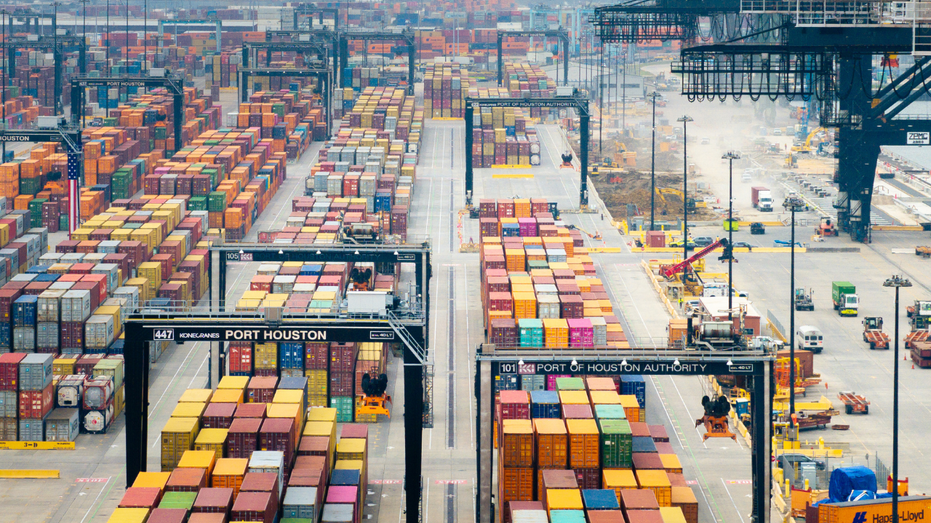
The JPMorgan Chase Institute’s report also found that monthly tariff payments made by midsize U.S. businesses have tripled since early 2025.
Tariff outflows by midsize firms jumped from nearly $100 billion a month in early 2025 and the two preceding years to roughly $300 billion per month at the end of 2025.
“A stable trend was interrupted by a sharp increase starting in April 2025, coinciding with the implementation of the first tariff rate increases during that year. Total payments continued rising throughout 2025 and eventually reached a level of roughly three times what it had been until early 2025,” the JPMorgan Chase Institute wrote.
Read the full article here