Key takeaways
- Subprime borrowers are charged nearly $3,400 more than others on average for essential financial products each year, a new Bankrate study finds.
- The subprime tax costs at least 4 percent of annual income for a typical American household with low credit.
- The subprime tax affects roughly 1 in 5 American adults (21 percent), according to Bankrate’s 2025 Credit Denials Survey.
It’s no secret that people with subprime credit pay more for many of life’s financial necessities: insurance, credit card interest, mortgage interest and more.
But how much more exactly?
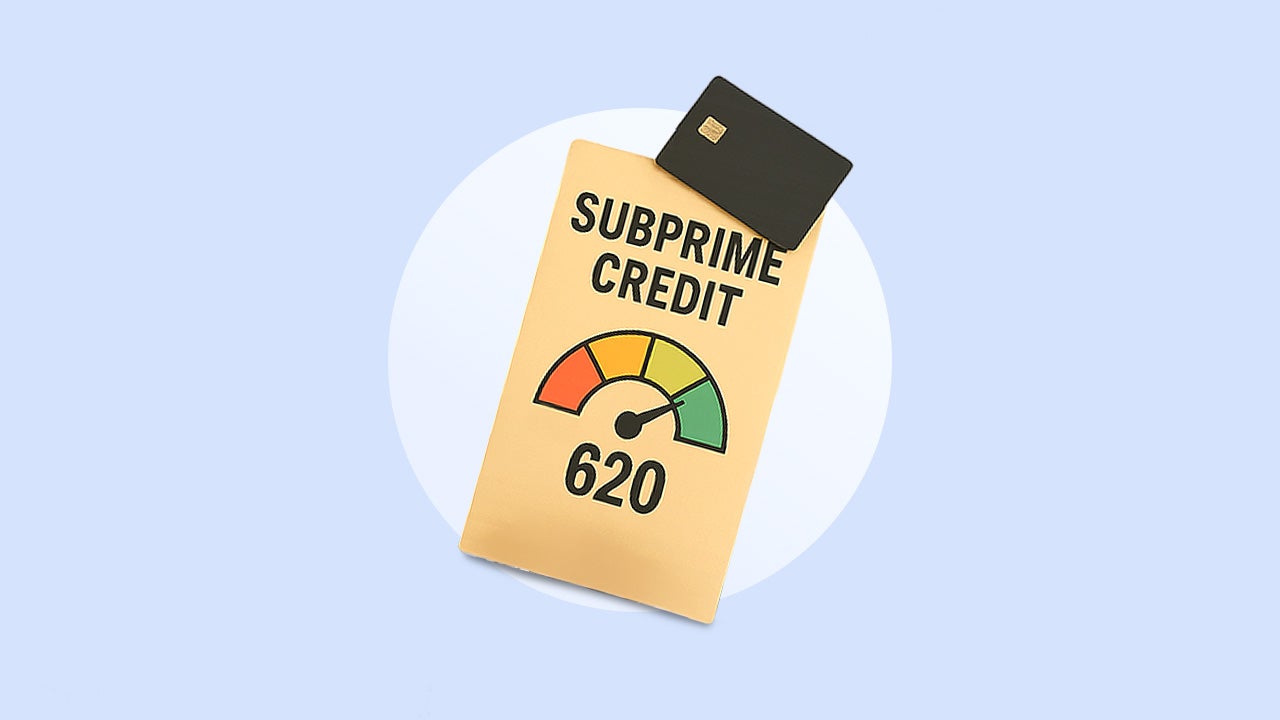
According to a new Bankrate study, subprime borrowers with a 620 credit score pay an average “tax” of $3,400 per year for essential financial products, like insurance and loans, compared to borrowers with a 700 credit score. In contrast, prime borrowers—those with credit scores of 700 or higher—face significantly lower interest rates and insurance premiums.
Those extra charges, which banks justify for accepting higher-risk borrowers, affect roughly 1 in 5 American adults (21 percent), according to Bankrate’s 2025 Credit Denials Survey.
The subprime tax increases over time if a borrower fails to improve their credit score, the study finds. Bankrate estimates the subprime tax could cost borrowers with a credit score of 620 or lower an average of roughly $17,000 over five years and more than $100,000 on average over 30 years.
The current high-interest rate environment only adds fuel to the fire. Loan approvals tend to become stricter and borrowing becomes more expensive for Americans when interest rates go up, but those factors hit low-credit households even harder, as evidenced in Bankrate’s 2025 Credit Denials Survey.
Not only do subprime borrowers pay more for mortgages, loan and insurance, they’re also more likely to face credit rejections and end up in a cycle of long-term debt. If interest rates stay higher for longer, the gap between what prime borrowers and subprime borrowers pay for financial products could widen even more over time.
“What’s really interesting about it [Bankrate’s estimated subprime tax] is just how stark and real it makes it. It is really eye-opening.” — Margaret Poe, TransUnion head of consumer education
The average tax for subprime Americans: $3,400 per year
Having a subprime credit score – 620 or lower – comes with a price tag, which Bankrate’s study estimates to be around $3,400 per year, or 4 percent of the typical household income. Annual income for a typical U.S. household stands at $77,719, according to inflation-adjusted U.S. Census Bureau estimates.
Four percent of annual household income – or $3,400 per year – may seem like a small figure in relation to other bills, but for many low-credit households, that could be the difference between having a well-stocked emergency fund or not.
Fewer than half of Americans (46 percent) have enough emergency savings to cover 3 months’ worth of expenses, and nearly a quarter (24 percent) have no emergency savings at all, according to Bankrate’s 2025 Emergency Savings Report.
People can maybe feel that credit is a little bit abstract if they’re not exactly in that buying process for getting a new credit card, a personal loan, a mortgage, but when you think about how all these different costs add up across, say, a year, and all the ways that you’re involved in the credit economy, it’s not surprising.
— Margaret Poe
TransUnion head of consumer education
Bankrate’s study shows that these extra costs stem from standard financial products such as auto insurance, home insurance, credit cards, auto loans, personal loans and mortgages. To estimate those costs, Bankrate analyzed rates for full-coverage auto insurance, home insurance and total accumulated interest. The premium and debt amounts in the calculations were based on national average data from Bankrate, Experian and FICO.
- Average credit card debt ($6,730)
- Average 60-month auto loan ($26,468)
- Average 24-month personal loan ($6,200)
- Average 30-year fixed-rate mortgage on a $400,000 home with 20 percent down
| Financial Product | Annual Subprime Tax | Percentage of Median Household Income | Subprime Tax Over 5 Years | Subprime Tax Over 30 Years |
|---|---|---|---|---|
| Mortgage Loan Interest | $1,330 | 1.7% | $6,648 | $39,886 |
| Auto Loan Interest | $745 | 1.0% | $3,726 | $22,356 |
| Auto Insurance | $514 | 0.7% | $2,570 | $15,420 |
| Home Insurance | $398 | 0.5% | $1,990 | $11,940 |
| Personal Loan Interest | $328 | 0.4% | $1,638 | $9,828 |
| Credit Card Interest | $89 | 0.1% | $444 | $2,664 |
| Total | $3,403 | 4% | $17,016 | $102,094 |
When looking at financial products based on national averages, subprime borrowers feel the most tax on mortgage loan interest, followed by auto loan interest, auto insurance and home insurance. The biggest difference between prime and subprime loans is typically in the interest rates they charge.
Here’s a more detailed breakdown of each financial product that makes up Bankrate’s annual estimate of the subprime tax:
Why does a “subprime tax” exist?
It’s a matter of risk, or creditors’ and coverage providers’ appetite for doing business with subprime customers. In their eyes: The lower your credit score, the more likely you are to fall behind on debt or file a claim. Fair or not, it’s as simple as that.
“There is no question that you pay more for credit when you have a lower credit score,” says TransUnion vice president Michele Raneri. “And so the higher credit score that you can get… you pay less for it.”
Experts also say that subprime borrowers usually take more time and effort to approve, since many need to submit additional documentation like bank records when seeking credit or coverage. Underwriting their applications tends to be more expensive, and those costs are passed off to the borrower in terms of higher premiums and APRs.
What does improved credit get you?
- You pay less in terms of premiums and interest rates.
- You get better coverage or credit offers.
- You’ll save more for the biggest purchase (and insurance policy) of your life: your home.
Michael Sullivan, personal finance consultant with Take Charge America, a nonprofit credit counseling company, says one late payment won’t lead to a poor credit score. What will is continuing behavior of either not repaying debt or not repaying it on time, he said.
“ The more [mistakes] you make, the more costly it is,” Sullivan said. “The more costly it is, the more likely it is to mess up your finances.”
Are there aspects of the credit score system that are flawed or unfair?
Research from Kansas City Federal Reserve economist Ying Lei Toh shows that credit scoring models can disproportionately penalize racial minorities and lower-income individuals. They might have a harder time qualifying for credit and coverage — some might even be credit invisible, meaning they don’t have a credit report, let alone score.
“We certainly don’t agree that that’s how credit should work,” says Chantal Rapport, the chief marketing officer at personal loan lender Upstart. “It is how it works for too many, and too many are overlooked or pay prices that are too high… We think it’s so important to look beyond this credit score that can really penalize someone for a specific mistake or a specific time or they’re [for example] new to the country and have a thin file. All of those things go into a really low credit score that may not align with your actual credit worthiness.”
The question becomes what credit bureaus — the true gatekeepers of consumer credit — are going to do about it. The popular response from the bureaus: It’s easier to educate consumers about how the system works instead of reinventing the system itself.
Poe highlighted the bureau’s work with community development financial institutions (CDFIs) and their own initiatives in underserved communities. She mentioned recently visiting middle schools in Chicago, where she’s based, to highlight the value of consumer education.
“What we try to really just focus on is the, ‘what we can do to potentially turn these things around,’” Poe says. She adds: “We know that there are these challenges in different communities in this country and financial inclusion, of course, is one of our big priorities at TransUnion.”
Credit hasn’t always been inclusive. And if you’re applying for a personal loan, your credit score doesn’t tell the whole story of your finances.
“What we find is that many traditional lenders are looking at a FICO score or credit score that only tells a really narrow part of a consumer’s financial history,” Upstart’s Rapport says. “And because they don’t know a more holistic picture of the user, they have to price in that uncertainty, which makes the cost go up for everybody, and especially the subprime borrowers or those with lower credit scores.”
There tends to be this feeling of ‘subprime equals subworthy,’ and we would firmly reject that idea.
— Chantal Rapport, Chief marketing officer at Upstart
What’s being done to help consumers improve their credit scores?
If you ask the three major credit bureaus, they’ll say they’re trying. Consider the tools they offer:
- Experian Boost is among the top credit-building apps because it can account for on-time payments for bills for rent and utilities that typically go unreported. (Rent reporting “can tangibly improve people’s credit scores,” according to a June 2025 study by the Urban Institute.)
- TransUnion Credit Essentials was launched in July to allow consumers to view their credit report and score daily, free of charge and without supplying a credit card.
- Equifax also offers credit monitoring, though advanced features, including identity theft protection, are premium, paid services.
What role do lenders play?
Other financial institutions are lessening the importance of credit score in the underwriting process. Rapport says Upstart, for example, leverages AI to judge more than 2,500 data points relating to a loan applicant. They include education, employment, income and detailed financial history — but no minimum credit score requirement.
Of course, subprime borrowers may still face the “subprime tax” when it comes to personal loan APRs, even with lenders like Upstart. Not always, however, especially if there are mitigating factors, such as a strong debt-to-income ratio, in your application. Upstart ‘s basement APR (6.60 percent in late July) was lower than the lowest advertised rate among many competitors.
“We do think more and more platforms should operate like Upstart does and really look beyond a credit number,” says Rapport, who adds that Upstart’s model approves 43 percent more applicants than traditional banks’. “How quickly the bureaus will catch up to that, I’m not sure.”
In the meantime, lenders with traditional and novel underwriting processes also offer products that are tried-and-true ways for consumers to get “credit” from credit bureaus, including:
Unfortunately, many of these products also require having savings — serving as collateral — that subprime consumers are less likely to have.
As for insurance providers, some cater to home and car owners without good credit. Like Upstart in lending, Cure Auto Insurance, for example, minimizes the importance of your credit. It promises to reward you instead for your driving record.
However, if you purchase a policy from an insurer that doesn’t weigh credit heavily in underwriting, you might not secure the most economical premiums — unless you live in a state where insurers are banned from considering credit altogether.
| Type of insurance | States where insurers can’t check credit |
|---|---|
| Home |
|
| Auto |
|
Actionable advice for consumers on how to improve their credit
TransUnion’s Poe likes to say that if you’re wondering how to increase your credit score, “the answers are in your credit reports.”
“For example, if your report shows accounts with missed payments, ensuring you have a plan to make all payments on time is essential — your payment history is one of the most important credit score factors and keeping those negative marks off your report may help your score going forward,” Poe says. “Or, perhaps you have high balances on your credit cards. This can affect your credit utilization. How much credit you’re using is another influential credit score factor. Creating a plan to pay down debt as efficiently as you can also help you build healthy credit.”
| Factors impacting your FICO score | |
|---|---|
| Payment history | 35% |
| Amounts owed | 30% |
| Length of credit history | 15% |
| Credit mix | 10% |
| New credit | 10% |
Once you know what to fix, just remember that it will likely require some legwork. You might have to dispute credit report errors, for instance, or save up to pay outstanding bills or balances.
“Healthy credit doesn’t happen overnight,” Poe says. “It takes patience and consistent good habits.”
Here are other experts’ advice on credit improvement tactics:
Make sure that you’re paying everything perfectly — that’s the way that you get the best credit score, is to not miss any payments. It also means keeping utilization down, so that you don’t max out credit cards. If you’ve got a couple of credit cards and you’re maxing them out, that’s also pulling your credit score down.
— TransUnion vice president Michele Raneri
I always say that credit is a financial tool when managed well, but debt can become a financial problem. I encourage people who are struggling with debt to make sure they have a clear understanding of their financial situation, including checking their credit report and FICO® Score… establish a budget if they don’t already have one and create a debt payoff plan. Small steps can quickly add up to big strides when it comes to paying off debt. The key is coming up with an actionable plan and sticking with it.
— Experian senior director Rod Griffin
Why we ask for feedback
Your feedback helps us improve our content and services. It takes less than a minute to
complete.
Your responses are anonymous and will only be used for improving our website.
Help us improve our content
Read the full article here