




The Credit for Other Dependents provides a $500 tax benefit for qualifying dependents who don’t meet the requirements for the Child Tax Credit. This credit covers dependents age 17 or older, including adult children, elderly parents and other relatives who rely on your financial support. Unlike the Child Tax Credit, this credit is nonrefundable, meaning it can only reduce your tax liability to zero rather than generate a refund. You claim this credit on the same tax form as the Child Tax Credit when filing your annual return.
A financial advisor with tax planning expertise can be a valuable resource when building a comprehensive financial plan. Connect with an advisor for free.
How the Credit for Other Dependents Works
The Credit for Other Dependents functions as a flat $500 reduction in your tax bill for each qualifying dependent you claim. To qualify, the dependent must be a U.S. citizen, U.S. national or U.S. resident alien with a valid Social Security number or Individual Taxpayer Identification Number (ITIN). They generally must either live with you for more than half the year or meet the IRS relationship test for qualifying relatives. Further, they cannot have provided more than half of their own financial support.
Common dependents who qualify include children age 17 or older still living at home, college students you support financially, elderly parents residing with you and other relatives, such as siblings, grandparents or in-laws who meet the dependency requirements. The dependent cannot file a joint tax return with a spouse, except in limited circumstances where the return is filed only to claim a refund.
Are There Income Limits?
Income limits apply based on your modified adjusted gross income (MAGI). The credit begins phasing out at $200,000 for single filers and $400,000 for married couples filing jointly. For every $1,000 above these thresholds, your combined Child Tax Credit and Credit for Other Dependents decrease by $50.
Who Qualifies as a Dependent for This Credit?
The IRS applies multiple tests to determine dependent status beyond just age and relationship.
The support test requires that you provide more than half of the dependent’s total financial support during the year. “Support” encompasses the cost of housing, food, clothing, medical care, education and other necessities. If your 20-year-old child earns $8,000 but you provide $9,000 in support, you meet this test. However, if they provide more than half their own support through earnings or other sources, they don’t qualify as your dependent.
The dependent cannot file a joint return with their spouse, with narrow exceptions for couples filing solely to claim a refund with no tax liability. Additionally, you cannot claim someone as a dependent if another taxpayer can claim you as a dependent. This rule is in place to prevent chains of dependency claims across multiple tax returns.
Child Tax Credit vs. Credit for Other Dependents

The Child Tax Credit offers significantly more value at $2,200 per qualifying child under age 17 for 2026. In comparison, the Credit for Other Dependents offers just $500. Age represents the primary distinction between these credits. The Child Tax Credit exclusively covers younger children. Meanwhile, the Credit for Other Dependents picks up where the Child Tax Credit leaves off.
Refundability marks another key difference. Up to $1,700 of the Child Tax Credit qualifies as refundable through the Additional Child Tax Credit, potentially providing money back even if you owe no taxes. The Credit for Other Dependents remains entirely nonrefundable and can only offset existing tax liability. If you owe $300 in taxes and claim a $500 Credit for Other Dependents, the remaining $200 provides no additional benefit.
Both credits share the same income phaseout thresholds and reduce proportionally as your income rises. A family might claim the full Child Tax Credit for their 15-year-old while simultaneously claiming the Credit for Other Dependents for their 19-year-old college student and 75-year-old grandmother living with them.
How to Claim the Credit for Other Dependents
You claim the Credit for Other Dependents using Schedule 8812. You’ll attach this form to your Form 1040 when filing your federal tax return. This is the same form used for the Child Tax Credit, allowing you to calculate both credits together if you have multiple types of dependents.
On Schedule 8812, you’ll list each qualifying dependent’s name, Social Security number or Individual Taxpayer Identification Number and their relationship to you. The form walks you through calculating your total credit amount based on the number of dependents. Then, it applies any income-based reductions if your modified adjusted gross income exceeds the phaseout thresholds.
Your tax preparation software will typically guide you through this process by asking questions about your dependents and automatically populating the correct forms. If filing manually, you’ll transfer the final credit amount from Schedule 8812 to the appropriate line on your Form 1040. The credit directly reduces your tax liability dollar-for-dollar up to the amount you owe.
Frequently Asked Questions (FAQ)
Can I claim both the Child Tax Credit and the Credit for Other Dependents in the same year?
A: Yes, many families claim both credits on the same tax return. You might claim the $2,200 Child Tax Credit for your 14-year-old while also claiming the $500 Credit for Other Dependents for your 19-year-old college student or elderly parent. Each dependent qualifies for one credit or the other based on their age and circumstances.
Can I claim my parent as a dependent for this credit if they live in a nursing home?
Yes, if you provide more than half of their financial support, including nursing home costs, and they meet all other dependency tests. They don’t need to live in your home full-time. However, they must be a U.S. citizen, U.S. national or U.S. resident alien with a valid Social Security number or ITIN.
What happens if my dependent turns 17 during the tax year?
The age requirement is determined as of December 31 of the tax year. If your child is 16 on December 31, they qualify for the full $2,200 Child Tax Credit. But if they turn 17 on December 31, they only qualify for the $500 Credit for Other Dependents.
Bottom Line
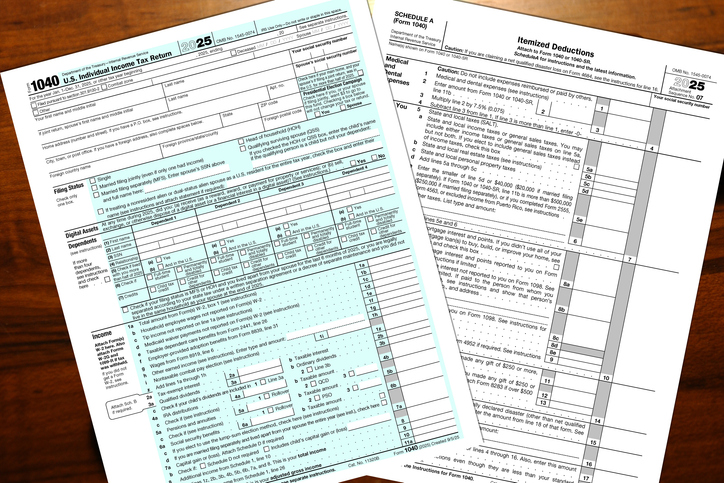
The Credit for Other Dependents provides a $500 tax reduction for qualifying dependents age 17 or older. This can include adult children, elderly parents and other relatives you support. While less valuable than the Child Tax Credit and nonrefundable, the credit offers tax savings for families with older dependents. You claim it using Schedule 8812, with income phaseouts beginning at $200,000 for single filers and $400,000 for married couples filing jointly.
Tips for Claiming Tax Credits
- Some financial advisors can help you identify available tax credits and coordinate tax planning with your broader financial goals. Finding a financial advisor doesn’t have to be hard. SmartAsset’s free tool matches you with vetted financial advisors who serve your area. You can have a free introductory call with your advisor matches to decide which one seems right for you. If you’re ready to find an advisor who can help you achieve your financial goals, get started now.
- Understanding the difference between refundable and nonrefundable credits is key. Refundable credits can result in a tax refund even if you owe no taxes. Meanwhile, nonrefundable credits only reduce your tax liability to zero, affecting which credits provide the most value.
Photo credit: ©iStock.com/dusanpetkovic, ©iStock.com/designer491, ©iStock.com/Larry_Reynolds
Read the full article here