


Illustration by Clay Laucella/Bankrate
Breaking into the Los Angeles housing market is a challenge. But Benny To, 32-year-old in public relations, found a savvy way to achieve his financial goal by purchasing a multifamily property and renting out one of the units. There was just one catch — it was a probate listing, or part of a deceased person’s estate. He spent nine months in court fighting for approval to buy the property.
Setting the scene on homebuying
In the Los Angeles metro area, affordable homes are hard to come by. A Bankrate analysis found just 0.5% of homes in Los Angeles are affordable compared to the city’s median income. Some California officials have encouraged residents to develop accessory dwelling units (ADUs) to house tenants as part of the “yes, in my backyard,” or YIMBYSism, movement. And exclusive data from the BMO Real Estate Financial Progress Index revealed over half (52%) of current Los Angeles homeowners plan to build and rent out an ADU to generate extra income.
“Investing in an ADU or other income-generating property is a creative path to managing rising costs.”
— Steve Kwei, BMO’s head of U.S. wealth banking
Behind his homebuying experience
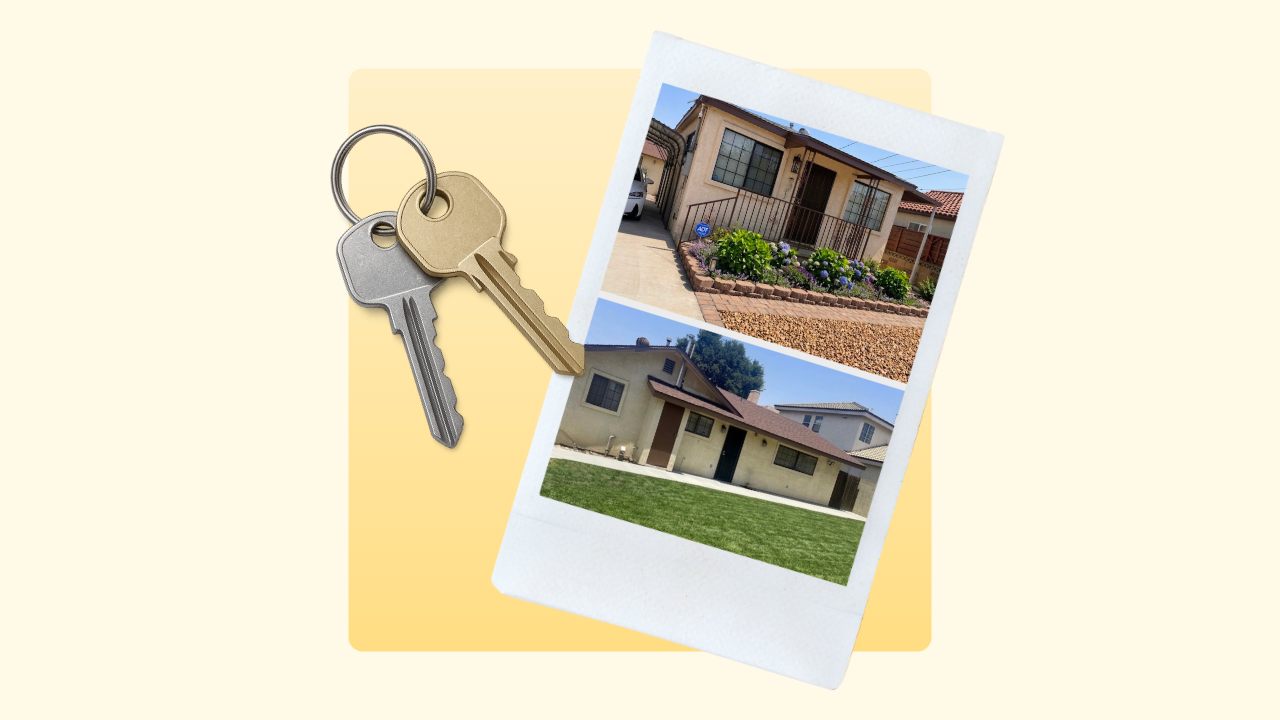
To wanted to buy a multifamily property, but he never expected to find it through a probate listing. Still, the El Monte property, 45 minutes from downtown Los Angeles, caught his eye. It had both a front and back house with private driveways and yards, which were separated enough to feel like two different homes.
He wasn’t sure if he wanted to rent out both units or keep one for himself. Ultimately, his lender ended up being the deciding factor. “Certain lenders require you to occupy the unit if you’re doing a conventional loan, and some are more strict about it than others,” To says. His was one of the stricter ones. To decided he’d live in the smaller unit and rent out the other — but first, he needed to get the keys.
A probate property is owned by a deceased person and typically requires court oversight to transfer ownership. But this one was listed as “probate sale, no confirmation required,” meaning the executor of the estate can sell without a judge’s sign-off. To’s real estate agent said the homebuying process would be easy.
Then, a family member of the deceased changed their mind. To had to get court approval for the purchase after all.
“I physically had to go to court, face the judge and go through the formal paperwork process,” he explains. Ultimately, it took nine months to purchase the property — much longer than a standard closing — but To is glad he persevered. The property both gives him a place to live and helps boost his income.The unique arrangement “is what made me stick around and fight for it,” he says.
An expert’s take
While owning a multifamily property can certainly pad your income, Steve Kwei, BMO’s head of U.S. wealth banking, warns buyers against overestimating rental consistency. He identifies this as “one of the biggest financial blind spots” for those relying on a tenant to cover their mortgage. To mitigate this risk, Kwei suggests a more conservative approach to budgeting. “A good rule of thumb is to underwrite your numbers around a 75% occupancy rate, rather than assuming the unit will be rented 100% of the time,” he says.
His homeownership dream
To is pretty confident that he’s found his forever home, but is open to what the future holds. Maybe someday, he’ll build a real estate portfolio. “The goal of real estate for my life is to use it as additional income,” he says. “It would be great to be able to get to a place where I can invest in more properties.”
Why we ask for feedback
Your feedback helps us improve our content and services. It takes less than a minute to
complete.
Your responses are anonymous and will only be used for improving our website.
Help us improve our content
Read the full article here